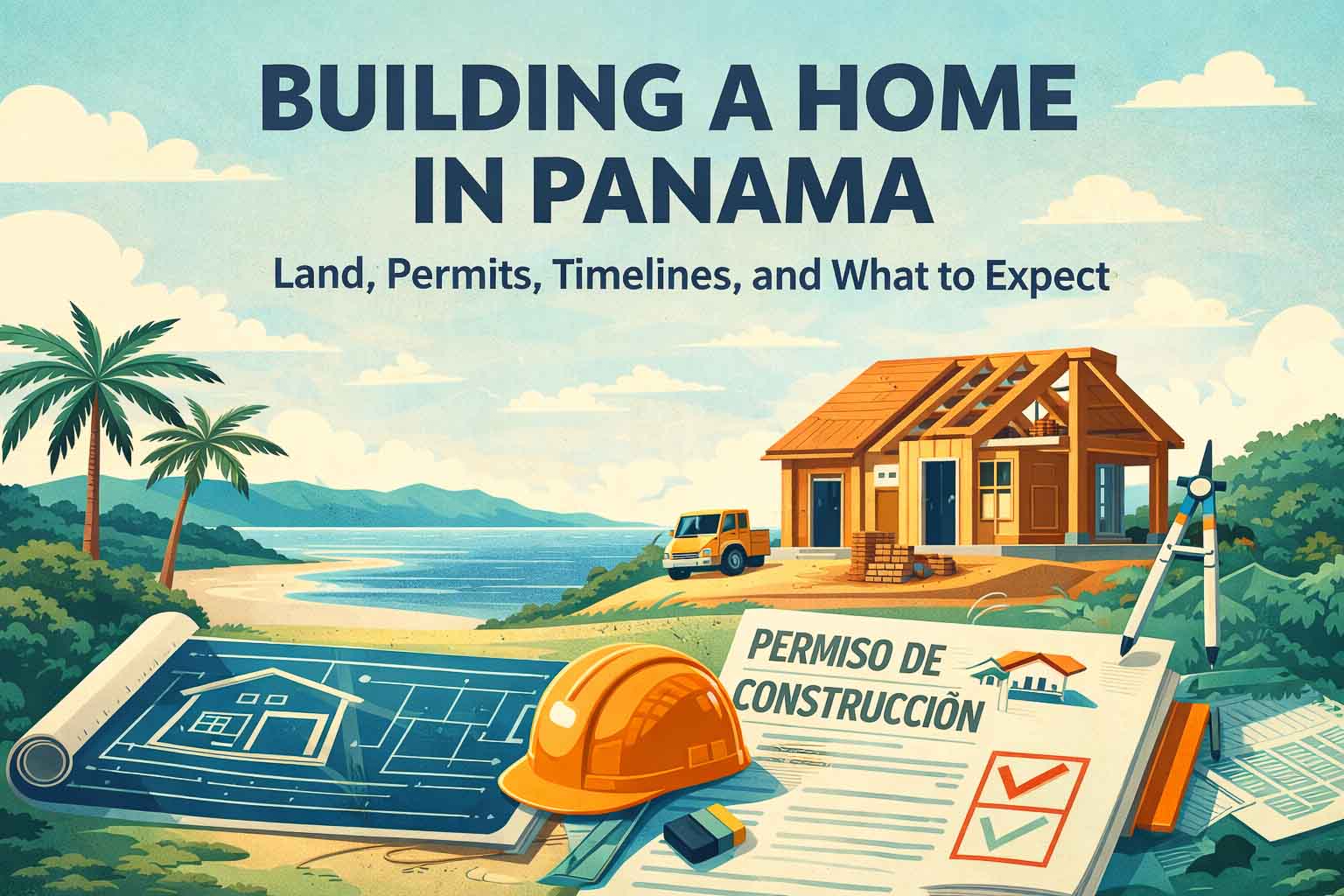
Building a Home in Panama: Land, Permits, Timelines, and What to Expect
Building your own home in Panama can be an incredibly rewarding experience—but only when the process is approached with the right expectations and the right team. While Panama is generally builder-friendly, land selection, permitting, and construction oversight are often underestimated by first-time builders, particularly foreign buyers.
This guide walks through the real-world steps involved in pulling a residential build permit in Panama, with a focus on single-family homes and owner-builders.
Start With the Right Land
Before architects, permits, or builders enter the picture, everything begins with land selection.
Working with a local, licensed real estate agent is critical. Local agents understand zoning, buildability, access issues, coastal setbacks, municipal regulations, and environmental overlays that are not always obvious from listings or satellite imagery.
Key items to confirm before moving forward:
- The land is properly titled (or legally buildable if rights of possession)
- Zoning allows residential construction
- Legal access exists
- Utilities are available or realistically attainable
- No overlapping claims or boundary disputes
Permit delays can originate from land issues that could have been identified at this stage.
Due Diligence on Title and Boundaries
Once a property is selected, proper legal due diligence is essential.
This typically includes:
- Title verification at the Public Registry
- Boundary confirmation against survey plans
- Zoning and land-use confirmation
- Review of coastal, environmental, or heritage restrictions
This phase is usually handled by a Panamanian attorney, often in coordination with a surveyor. Rushing or skipping this step can create major problems later in the process.
Choosing the Right Builder
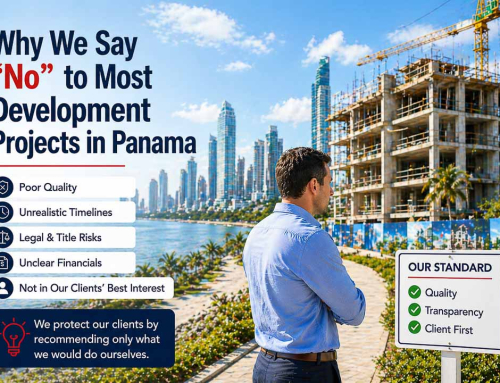
Panama has no shortage of builders—but quality varies significantly.
There are excellent builders in Panama, but they are vastly outnumbered by average or unreliable ones. References matter, completed projects matter more, and clarity around scope is essential.
When interviewing builders:
- Visit completed homes, not just active sites
- Speak directly with past clients
- Clarify scope, timeline, and exclusions in writing
- Confirm who coordinates with the architect and municipality
- Be cautious of vague pricing or unrealistic timelines
Your builder will play a major role not just in construction quality, but in how smoothly the permit and inspection process unfolds.
Planning With the Architect
In Panama, all construction plans must be prepared and signed by a licensed Panamanian architect or engineer. Foreign architects may collaborate on design, but they cannot legally sign or submit plans.
During this phase:
- Architectural plans are finalized
- Structural, electrical, and plumbing drawings are prepared
- Zoning, setbacks, height limits, and density are addressed
- Construction value is estimated (which impacts permit fees)
A well-prepared plan set can significantly reduce delays during municipal review.
Environmental Approval (If Required)
Depending on the location and scope of the project, approval from MiAmbiente (the Ministry of Environment) may be required.
This is common for:
- Coastal properties
- Larger residences or subdivisions
- Properties near rivers, mangroves, or protected areas
Environmental approval may be straightforward or may require a formal Environmental Impact Study, depending on the classification of the project.
Pulling the Building Permit
With plans finalized and approvals in place, the architect submits the permit application to the local municipality.
A typical submission includes:
- Architectural and engineering plans
- Proof of ownership
- Environmental approval (if applicable)
- Professional credentials and owner information
The municipality reviews the project for zoning compliance, safety, setbacks, and land use conformity.
Cost of a Residential Building Permit
Building permit costs vary by municipality but are generally calculated using a per-square-meter formula based on the declared construction size and value.
Important points:
- Fees are municipality-specific
- Costs scale with project size
- Payment is required before permit issuance
Your architect or builder should provide an estimate early so it can be included in your overall budget.
Inspections and Final Approval
During construction, municipal and fire department inspections may occur at various stages. Deviations from approved plans can cause delays or require revisions. Once construction is complete:
- A final inspection is conducted
- A certificate of occupancy is issued by both the fire department and the municipality
- The property can be legally occupied
A Realistic Timeline — and Why Owner Involvement Matters
Even in the best-case scenario, building a home in Panama is typically a 12–18 month process. Permitting, weather, labor availability, material sourcing, and logistics all influence the pace of construction.
While a strong builder and architect can keep a project moving efficiently, this is not a passive process. Construction quality and execution can vary day to day. Crew size may change, materials may arrive late or differ from expectations, and on-site decisions often need to be made quickly to avoid delays. Those decisions—sometimes made to keep momentum—can affect the remainder of the build.
For this reason, owner involvement matters.
To the extent possible, being present and checking in regularly helps ensure the project continues to align with your vision—not just the plans on paper, but the details that define how the home ultimately looks and functions.
If you cannot be on site consistently, some owners choose to engage an independent owner’s representative or project advocate. This third party periodically visits the site, monitors progress, flags issues early, and provides clear updates so decisions can be made remotely and confidently.
In Panama, successful builds are rarely about speed. They are about oversight, communication, and timely decision-making.
Final Thoughts
Building a home in Panama is not inherently complicated—but it does require structure, patience, and the right professionals. Most challenges arise not from bureaucracy, but from poor land selection, weak contractor oversight, or unrealistic expectations.
With proper planning and involvement, the process can be both manageable and rewarding—and the result is a home that truly reflects your goals and lifestyle.
If finding a finished home is more your speed, check out our finished home listings and contact us to start a conversation.