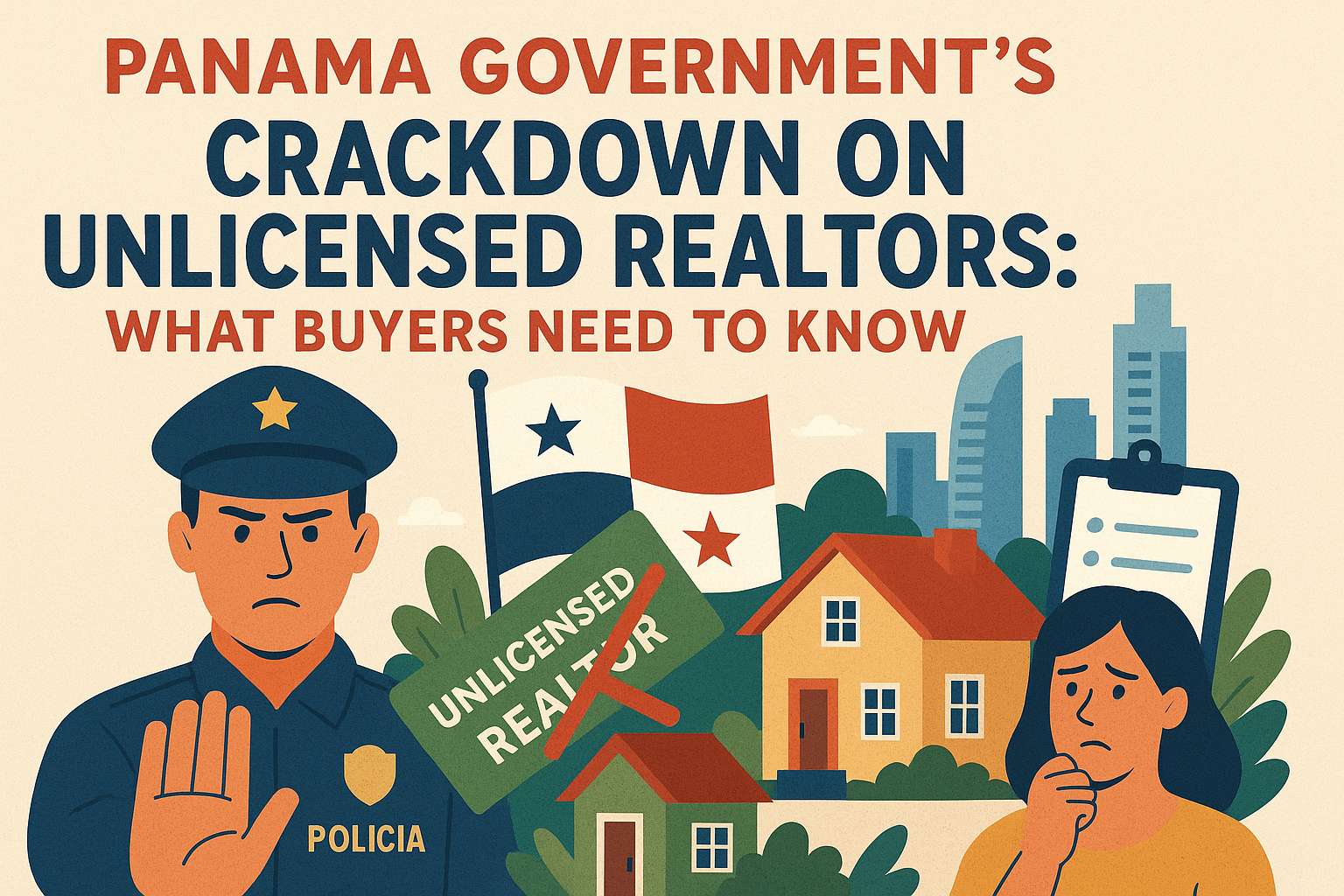
Panama Government’s Crackdown on Unlicensed Realtors: What Buyers Need to Know
In 2025, Panama is tightening enforcement in its real estate sector — and for good reason. A growing number of foreign buyers and investors have fallen victim to unlicensed individuals posing as real estate agents, leading to disputes, financial losses, and other avoidable complications.
In response, the government has renewed efforts to crack down on unlicensed agents across Panama, reinforcing strict regulations to protect buyers and sellers. If you’re thinking about buying or selling property in Panama, this guide will help you understand the laws, risks, and how to verify if your agent is legally licensed to help you buy or sell property in Panama.
What’s Happening in 2025? Why Is Panama Cracking Down?
In the United States and Canada, if you’ve ever worked with a realtor, they were almost certainly licensed. In fact, it may have never even occurred to you to ask. It was probably just a given that your real estate agent had a valid real estate license. After all, in those markets licensing is required by law, and the law is strictly and consistently enforced. In Panama, it’s a different story. Real estate can still feel a lot like the “Wild West.” While licensing requirements exist, they are seldom enforced proactively and typically only come into play only when a formal complaint is filed against an unlicensed individual, i.e., when something goes wrong.
Currently, in order to operate legally as a real estate broker or agent in Panama, an individual must hold a valid Panamanian real estate license. The same goes for real estate companies. The national real estate board, La Junta Técnica de Bienes Raíces (JTBR), is the official government body that issues and regulates these licenses. Buyers and sellers should always confirm that both their agent and brokerage are properly licensed to work as a real estate agents in Panama (learn how below). Working with unlicensed agents exposes buyers and sellers to substantial risk and ultimately undermines the integrity of the real estate market.
Why working with unlicensed individuals or companies poses a problem for buyers and sellers:
- Higher risk: Greater chance of misrepresentation or mishandled transactions.
- Gaps in expertise: Limited market knowledge and weak contract/process execution.
- Lack of buyer / seller safeguards: Unlicensed agents hold no bond or insurance protection if something goes wrong.
Why It Matters to Foreign Buyers
Many unlicensed agents may target foreigners who:
- Just assume that their “realtor”, “agent”, “investment advisor”, etc, is properly licensed.
- Don’t speak fluent Spanish.
- Are unfamiliar with Panamanian real estate laws and customs.
- Are buying sight-unseen or are first time buyers.
What unlicensed agents cannot do in Panama:
- Work as agents under the cover of a licensed brokerage: the law is crystal clear on this.
- Broker sales and leases: act as mediator/agent between owners and third parties.
- Negotiate and manage deals: attend showings, present offers, and negotiate contracts.
- Earn a commission: unlicensed agents ARE NOT legally permitted to charge and earn commissions for brokering transactions
Unlicensed agents often operate in a parallel universe—under the radar or even under the umbrella of otherwise legitimately licensed companies. Many unlicensed agents also work in plain sight, advertising online with strong social media presence. To the casual, unsuspecting observer, they can very easily pass as licensed professionals. But they are not. So how can you, as a buyer or seller, verify that your agent is licensed?
Types of Real Estate Licenses in Panama
There are two types of real estate licenses issued in Panama—one for individuals and one for companies. Both must hold a valid license to legally act as intermediaries in real estate transactions. Individuals must also possess a license in order to “have listings”, show property to potential buyers, or negotiate and earn commissions.*
- Individuals – Whether working independently or under a brokerage, every agent must possess a valid individual license.
- Companies – Every real estate firm or brokerage must also hold a corporate license to operate legally.
How to Tell Them Apart:
- Individual Licenses: Format PN-XXXX, where PN stands for Persona Natural (natural person) and XXXX is a four-digit number.
- Corporate Licenses: Format PJ-XXXX, where PJ stands for Persona Jurídica (legal entity or corporation).
In short, both the agent and the company they represent must be properly licensed for the transaction to be fully compliant under Panamanian law.
*Individuals employed by developers or working in salaried positions can legally perform certain functions similar to those of commissioned agents—such as marketing, property showings, and handling contracts. However, the vast majority of people calling themselves “agents” are not on a developer’s payroll and therefore do not fall within this limited exemption.
How to Verify If a Realtor Is Licensed in Panama
You can check an individual’s or brokerage’s license status by asking for their:
Be cautious of individuals or companies who:
- Cannot or do not provide their license number upon request.
- Lack reputational markers online (positive Google reviews, a modern functional website, etc).
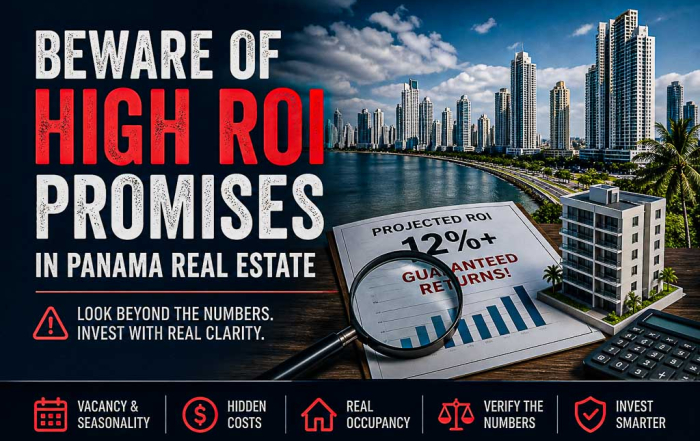
- Present offers that sound too good to be true or appear to be out of line with market conditions.
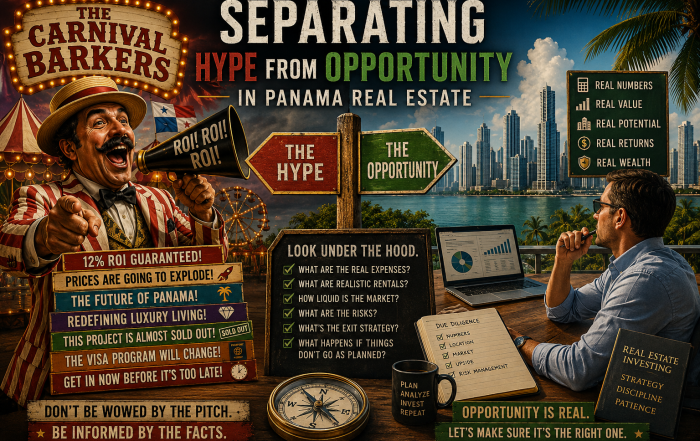
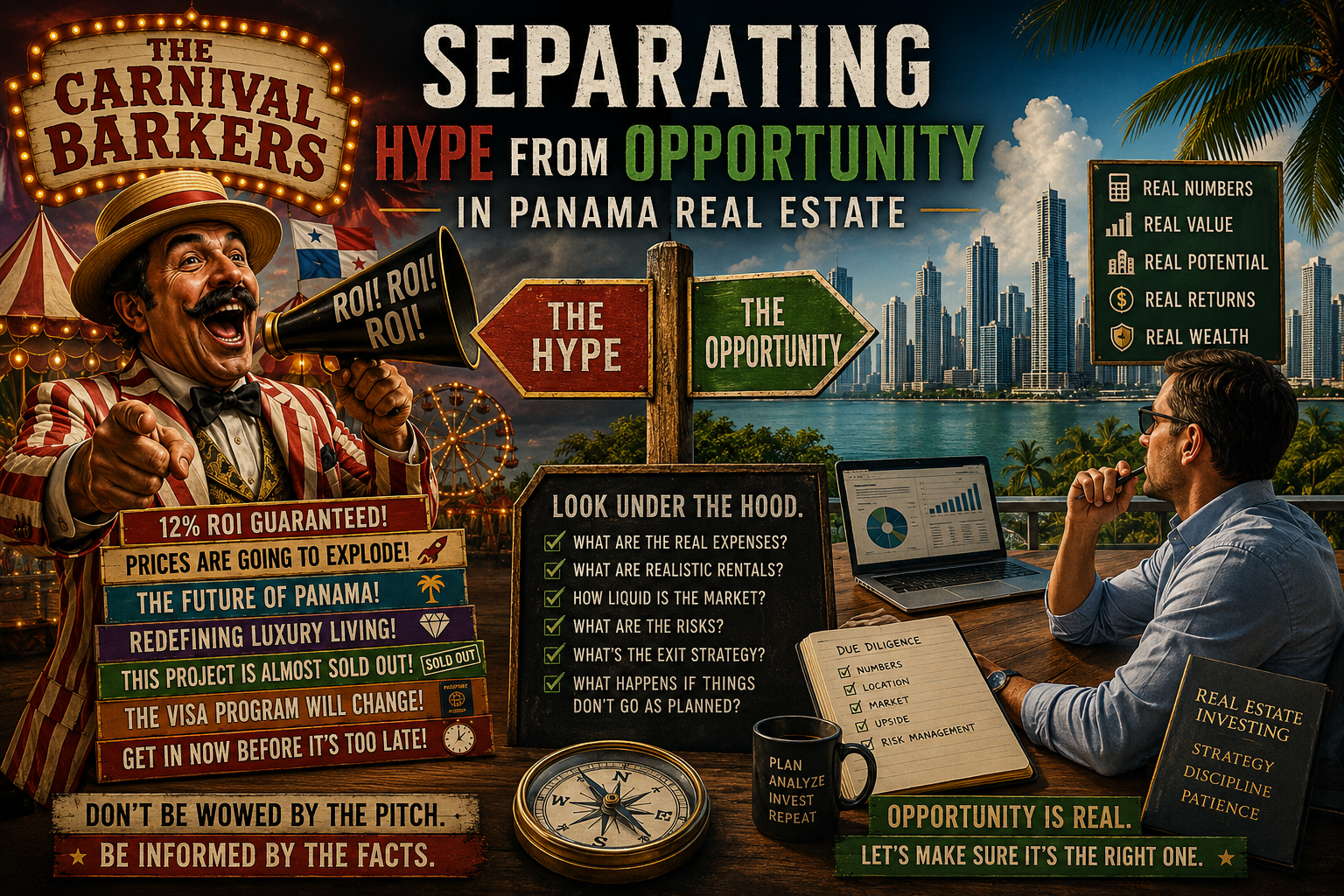
- Make exaggerated claims or offer guarantees that conflict with realistic market expectations.
What Penalties Are Unlicensed Agents Facing in 2025?
The government has increased enforcement activity, particularly in larger markets like Panama City, Coronado, Playa Venao, Boquete, and Bocas del Toro.
Penalties include:
- Fines up to US$10,000 for practicing without a valid license.
- Suspension or cancellation of corporate license for companies who contract with unlicensed individuals.
- Legal consequences: Potential criminal proceedings in serious cases.
- Loss of residency status (and deportation) for foreigners operating illegally as real estate agents.
How to Protect Yourself When Buying in Panama
-
- Always Work With a Licensed Broker
Insist on working with an agent who willingly presents their license number (PN-XXXX). If they dodge the request, walk away. - Use a Panamanian Attorney
A qualified lawyer will review all documents, confirm title validity, and ensure the seller and broker are operating legally. - Always Submit a Written Offer or Purchase Agreement Through a Licensed Agent
Avoid verbal or WhatsApp-based deals.
- Always Work With a Licensed Broker
Can You Report an Unlicensed Agent?
Yes. You can report unlicensed agents to:
- The National Real Estate Board (JTBR): https://mici.gob.pa/jtbr-recepcion-de-denuncias/
- ACOBIR: https://www.acobir.com/colsultoria/denuncias/
- Your attorney, who can issue a formal complaint or legal notice
This helps protect other buyers and upholds professional standards in the industry.
Trust the Licensed Professionals
The government’s crackdown on unlicensed realtors in Panama is a positive step toward a safer, more transparent market — especially for foreign investors and expats.
To protect your money, your property, and your peace of mind:
- Work only with licensed agents
- Get everything in writing
- Hire a real estate attorney
- Ask questions and verify documents
At Panama Sovereign Realty, our team is fully licensed, bilingual, and experienced in helping buyers navigate Panama’s legal property system with confidence.