Separating Hype from Opportunity in Panama Real Estate
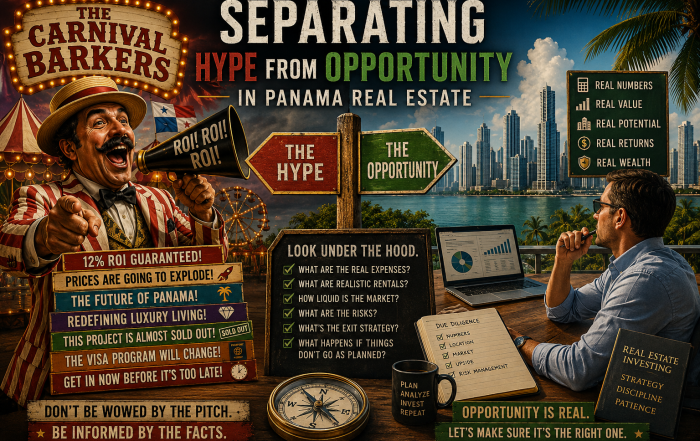
See it before it’s gone! You won’t believe your eyes! Everyone’s talking about it!
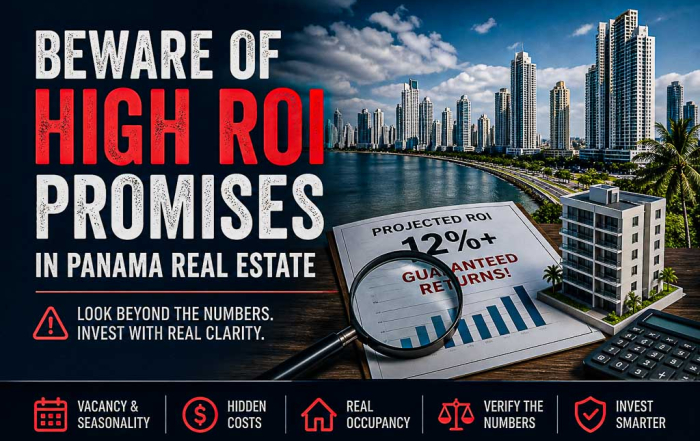
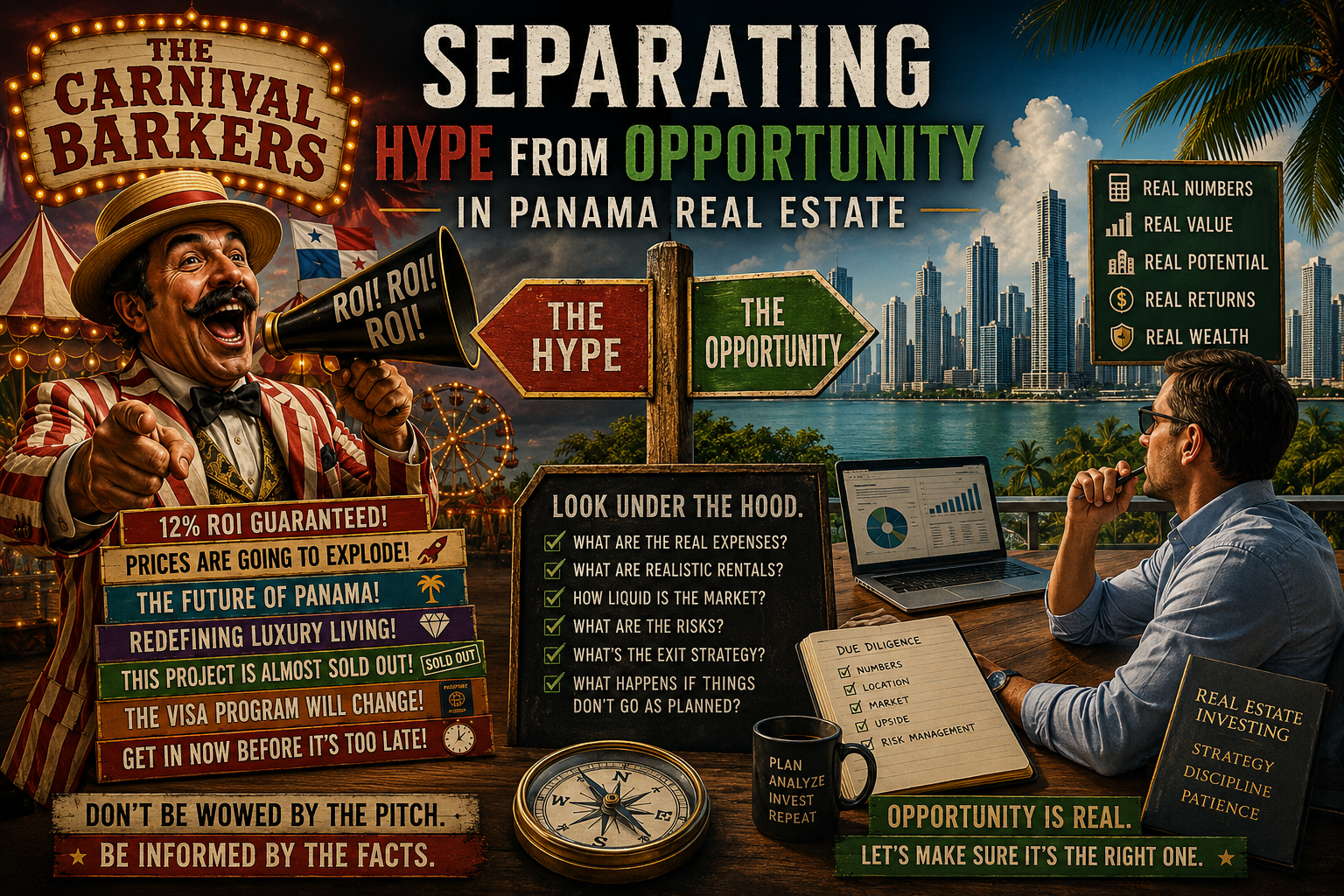
8% ROI! 10% ROI! 12% ROI!!!
Prices are going to explode!
This project represents the future of Panama!
This project is redefining luxury living!
Get in now before it’s too late!
The visa program is about to change!
This project is almost sold out!
If you’ve spent any meaningful amount of time researching Panama real estate, you’ve heard these lines before. In fact, you’ve probably heard them so often that they begin to sound like background noise.
That’s because the carnival barkers never stop BARKING!
The term “carnival barker” traditionally referred to the person standing outside a circus tent or sideshow shouting through a megaphone, promising unbelievable sights, incredible opportunities, and once-in-a-lifetime experiences. Their job wasn’t to help you carefully evaluate what’s inside. Their job was to create excitement, urgency, and curiosity strong enough to get you through the door.
The term has become shorthand for anyone who relies more on hype than substance, more on emotion than analysis, and more on promises than facts.
Not every Panama real estate salesperson is a carnival barker. Far from it. But if someone is spending all their time shouting about guaranteed returns, appreciation, disappearing opportunities, and the next big thing while avoiding discussions about expenses, liquidity, risk, and exit strategy, you may be listening to one.
The problem isn’t Panama. The problem is the people who make a living selling fantasy instead of keeping it real.
Panama Is Still One of the Most Compelling Stories in the Region
Before we get into this, let’s be clear about something: the purpose of this article is not to discourage people from investing in Panama.
Far from it.
We have over two decades of experience in this market. We’ve helped hundreds of clients buy property here, wisely. If we didn’t believe in Panama, we wouldn’t still be here.
Panama has a tremendous amount going for it:
- Safety.
- A dollarized economy.
- A strategic geographic location.
- Strong connectivity.
- A major logistics and banking hub.
- Favorable tax environment.
- Political stability.
- A growing retiree and expatriate community.
- An attractive lifestyle that combines modern conveniences with beaches, mountains, and year-round warm weather.
For many buyers, Panama represents much more than an investment.
- It represents a Plan B.
- It represents geographic diversification.
- It represents options.
- It represents a place where they can spend part of the year, retire, relocate, or simply hold assets outside their home country.
Those are real benefits.
Likewise, strong investment returns are absolutely possible.
- Many investors have done very well in Panama.
- Many buyers have experienced significant appreciation.
- Many vacation rentals generate attractive income.
- Many development projects have delivered excellent results.
The problem is not that these outcomes are impossible.
The problem is when people start presenting them as inevitable.
Good returns are possible. They are not guaranteed.
Appreciation is possible. It is not guaranteed.
Success is possible. It is not automatic. Don’t fall victim to the barker’s charm. It’s pretty easy to spot and avoid a barker once you know what to look for.
Now let’s get into it.
Selling the Dream
Every business markets. We market. Developers market. Hotels market. Airlines market. There is nothing wrong with marketing.
The problem begins when marketing crosses the line into distraction and deception.
Instead of helping buyers understand a property, the goal becomes keeping them so excited that they either never ask the hard questions, or are charmed into thinking the answers don’t matter.
- What’s the actual occupancy rate?
- What is a realistic rental rate?
- How many competing units are coming online?
- What are the HOA fees?
- What are the property taxes? Annual maintenance costs?
- What’s the exit strategy?
- How liquid is the market? What’s average time on market for similar properties?
- How many comparable sales support the asking price?
Suddenly those questions become inconvenient to the carnival barker.
The conversation gets redirected back to the rooftop pool, the projected appreciation, the future marina, the upcoming infrastructure project, or the projected double-digit returns.
The hood stays closed.
The ROI Fairy Tale
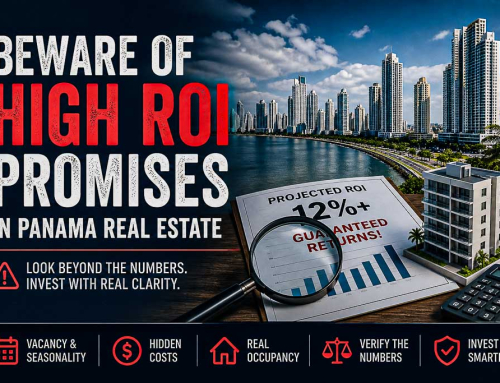
Perhaps our favorite claim is the high ROI.
The numbers always look incredible.
The problem is they often exist in a spreadsheet fantasy world.
The projected rental income is aggressive.
The occupancy assumptions are optimistic.
Maintenance and property management costs are understated or ignored.
Vacancy is underestimated.
Furniture replacement is ignored.
Unexpected repairs are ignored.
Transactional costs are ignored.
The result is a beautiful-looking projection that bears little resemblance to actual ownership. This doesn’t mean the investment is bad. It means you need to run the numbers yourself.
A property that produces 5% after realistic expenses may be a great investment.
A property marketed at 12% that ultimately produces 3% is not.
The barker will say, “well that’s how everyone calculates ROI in Panama so right or wrong it’s how we calculate it too. The truth won’t sell apartments”.
The truth may not sell as many apartments, but when the math doesn’t end up mathing, don’t be the one holding the bag.
The Appreciation Prophets
Then there are the appreciation prophets.
They know exactly what prices are going to do.
Prices are going up.
Always.
Every pre-construction project is about to appreciate. Have they looked at the historical data, or are they just relying on “appreciation vibes”?
Every neighborhood is the next big thing.
Every beach town is the next Tulum.
Every district is the next Miami.
The confidence is impressive.
The accuracy is usually less impressive.
Nobody knows what future appreciation will be.
Nobody.
Not developers.
Not brokers.
Not YouTubers.
Not consultants.
Not economists.
What we can do is examine supply, demand, infrastructure, demographics, historical sales, and market conditions. And when we dig into the actual facts the picture is quite different from the ones painted by the barkers.
Everything beyond that is speculation.
And speculation should be labeled as speculation.
The Visa Fearmongers
Another favorite tactic is urgency through immigration.
The residency requirements are about to increase.
The visa program is about to change.
You have to buy before October.
You need to act immediately.
Sometimes these claims are true.
Most of the time they’re rumors, speculation, or wishful thinking.
Before making a six-figure investment because someone claims a program is changing, ask for the source.
Not a blog.
Not a Facebook post.
Not a WhatsApp message.
An actual government source.
You’d be surprised how often the trail goes cold.
Panama Is Not a Magic ATM
One of the biggest mistakes foreign buyers make is assuming Panama operates outside the laws of economics. It doesn’t.
- Properties can sit on the market for a long time before they sell.
- Markets can soften.
- Projects can underperform.
- Rental demand can fluctuate.
Bad investments exist. Good investments exist too. The challenge is telling the difference.
But that can be a challenge when everyone is barking that every opportunity is amazing.
What Serious Investors Actually Do
Serious investors aren’t looking for excitement.
They’re looking for facts.
They want to know:
- What are comparable sales?
- What are realistic rents?
- What are the real world expenses?
- What are the risks?
- What happens if things don’t go perfectly?
- What is my exit strategy?
The best investors spend far more time looking for reasons not to buy than reasons to buy.
The carnival barkers do the opposite.
The Bottom Line
Panama offers real opportunities.
We’ve seen clients do exceptionally well here.
We’ve also seen people buy based on hype, projections, and promises that never materialized.
The difference usually comes down to one thing:
Did they look under the hood? Or did they get distracted by the barking?
Did they buy? Or were they SOLD??
When someone starts talking about guaranteed returns, built-in appreciation, disappearing opportunities, or once-in-a-lifetime deals, don’t get excited.
Get curious. Ask questions. Demand evidence. Real evidence from legitimate sources. Not an excel proforma with the developer’s or barker’s logo on it.
Verify assumptions. Run your own numbers. Because the best investments don’t need a carnival barker standing outside yelling through a megaphone. They stand on their own.
Final Thoughts
Panama is one of the most compelling countries in the hemisphere for investors, retirees, entrepreneurs, and those seeking a Plan B. Strong returns are possible. Appreciation is possible. Lifestyle improvement is possible. Geographic diversification is possible. Many people have done very well here.
But none of those outcomes are guaranteed.
That’s why buyers should be wary of anyone who spends more time selling excitement than discussing facts. The carnival barker wants you focused on the bright lights, the promises, and the possibility of striking gold. The prudent investor looks under the hood.
Ask difficult questions. Verify assumptions. Demand evidence. Understand the risks as thoroughly as the opportunities.
The best investments don’t require a megaphone. They don’t need artificial urgency, exaggerated projections, or fear-based sales tactics. They stand on their own merits.
Panama has a lot going for it. Just make sure you’re investing based on facts, not fantasy.